
Why fruit is one of the biggest 2026
wedding flower trends
Something lovely is happening with wedding flowers this year. Couples are moving away from the polished and the perfectly matched, and reaching for something that feels a little more alive. More abundant. More like the garden after a good summer. If you have found yourself drawn to arrangements that spill and trail and look like they were gathered that morning, you are noticing one of the biggest 2026 wedding flower trends of all: organic elements taking centre stage, with fruit leading the way.
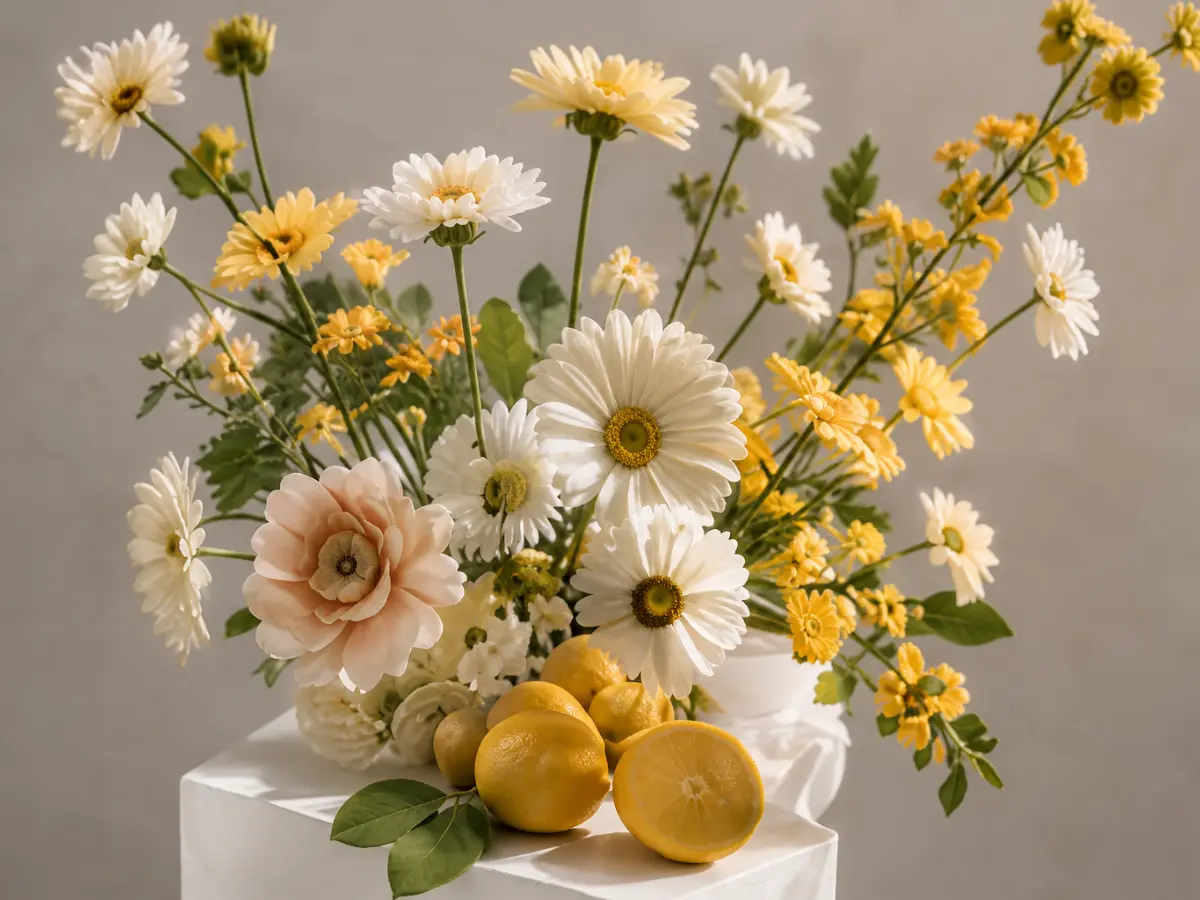
This is the kind of work I love most. A cluster of lemons tucked among the blooms, grapes threaded so they catch the light, a single fig split open on a table runner. Fruit brings texture, colour, fragrance and a real sense of plenty to a celebration, and it does it in a way that feels warm and unexpected rather than staged. It is beautiful, it is a little bit playful, and it stays with people long after the day is done. So when life gives you lemons, I say make something beautiful. Here is how fruit is finding its way into weddings and events this year, and how to style it so it feels considered rather than kitsch.
Why fruit is one of the biggest 2026 wedding flower trends
For a few seasons now, wedding styling has been softening. Stiff, symmetrical arrangements have given way to loose, garden-gathered shapes, and 2026 is where that shift really settles in. Organic elements are the heart of it, and fruit is the detail that makes people stop and look twice.
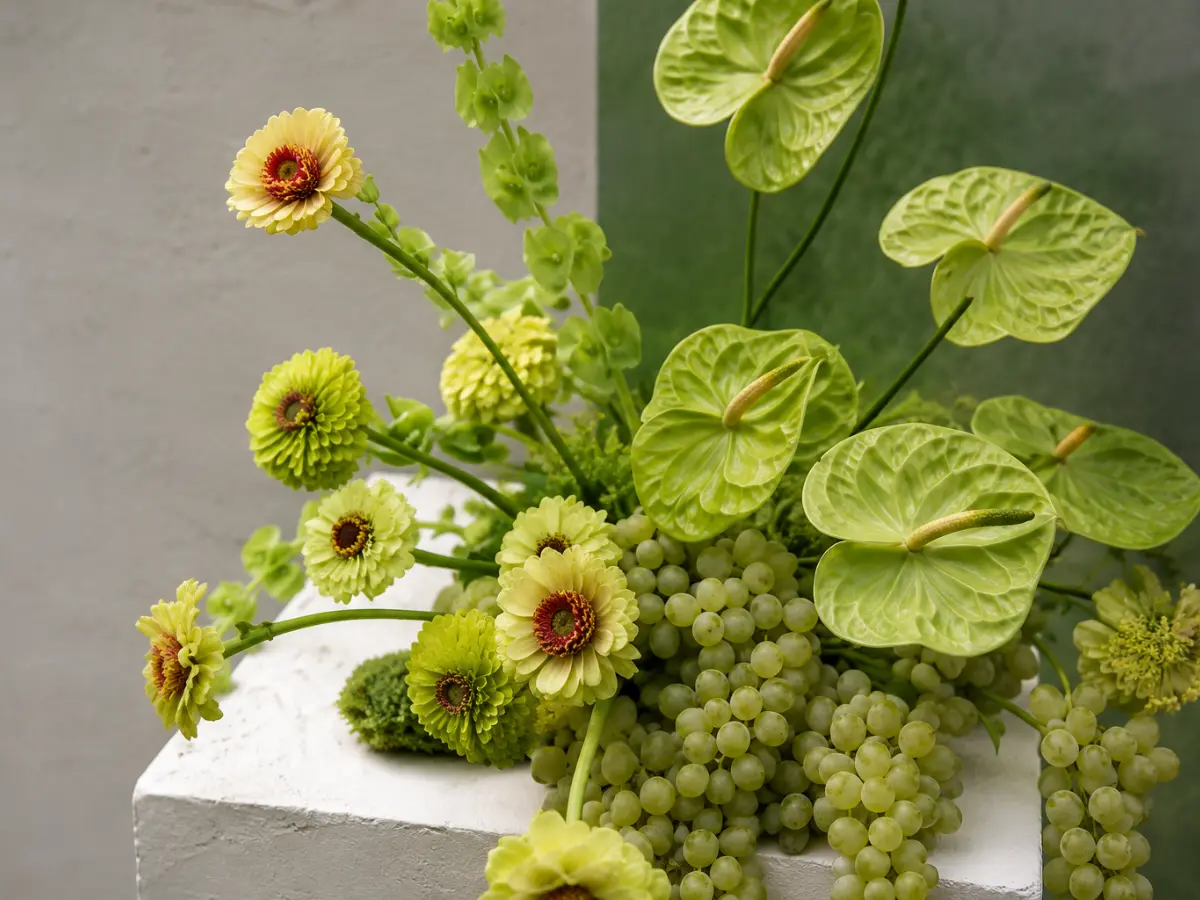
Part of the appeal is sensory. Fruit adds movement that flowers alone cannot, from grapes that tumble down the side of an urn to citrus that sits heavy and low among lighter blooms. It brings colour in deep, natural tones, and a gentle fragrance that lifts a whole room. There is also something about abundance that feels right for a wedding. A table that looks generous feels generous.
And here is a happy secret. Fruit often helps a flower budget stretch further. A few pieces of seasonal citrus or a trailing vine of grapes can fill out an arrangement beautifully for a fraction of what the same volume of premium blooms would cost. You get more presence on the table, and more room in the budget for the things that matter most to you.
Fruit in your bridal bouquet
The bouquet is where a little fruit goes a long way. I am not talking about anything heavy or overdone. Think of the smallest touches: a few kumquats on the stem, a cluster of berries still on the vine, or a single fig nestled deep in the blooms where it catches the eye as you turn.
These details give a bouquet gorgeous movement and a sense that it was gathered rather than assembled. They photograph beautifully too, because the eye lingers on the unexpected.
For a summer wedding, a hint of citrus against soft, natural flowers feels fresh and a little bit joyful, exactly the note most couples want to strike as they walk down the aisle.
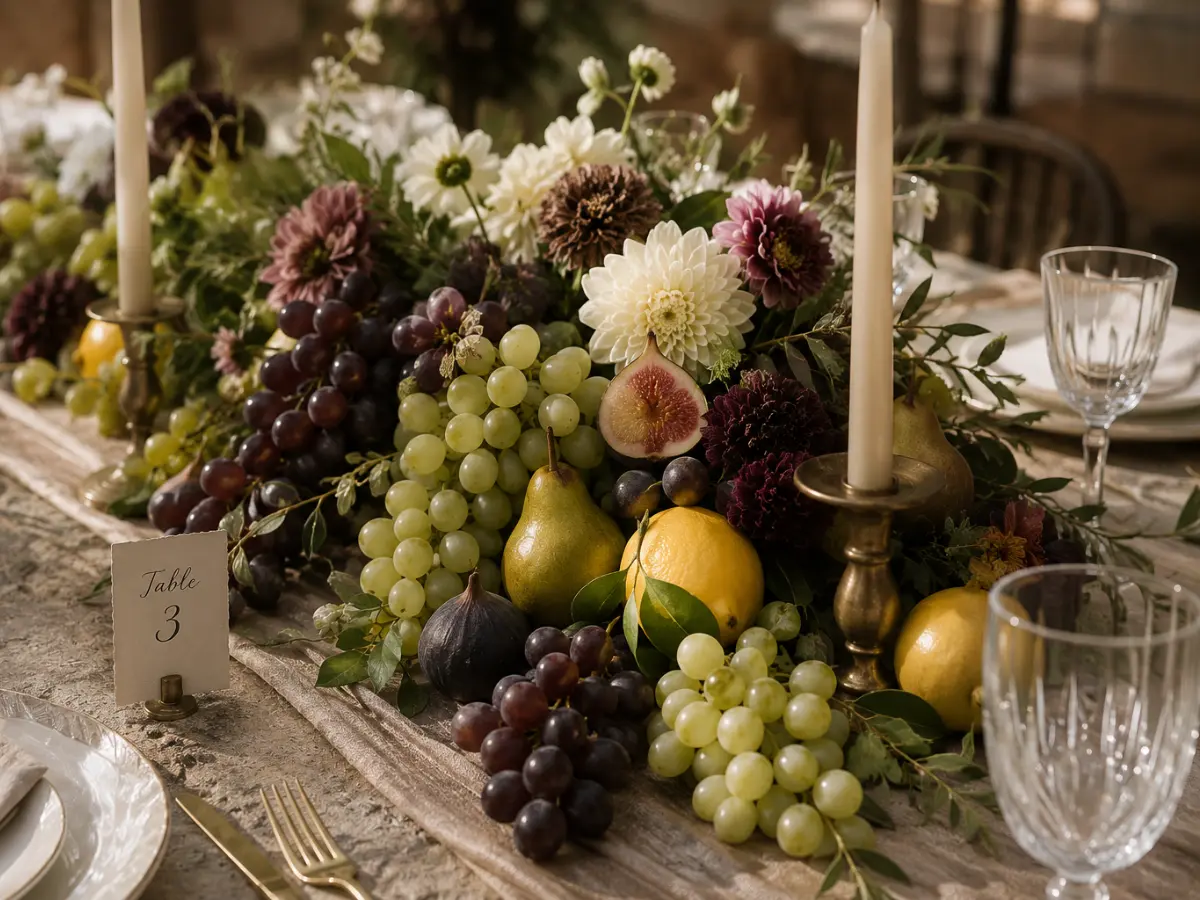
Table styling with threaded grapes and pears
The reception table is where fruit truly comes into its own. This is the moment your guests settle in, and it is worth making it feel abundant.
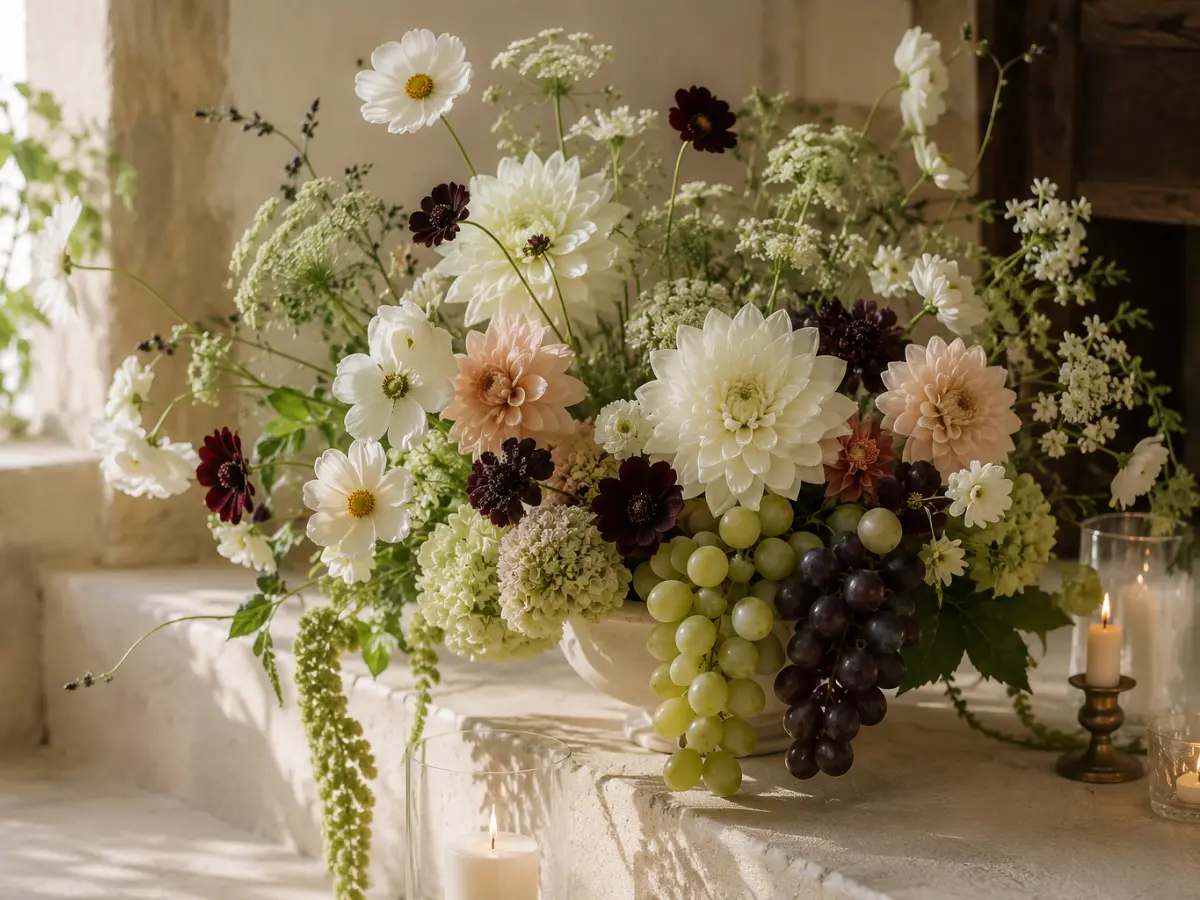
Threaded grapes are one of my favourite touches. Strung so they trail along a runner or spill from a low centrepiece, they add movement and a lovely depth of colour, from the palest greens to deep, wine-dark purples. Pears dotted through the arrangement, sometimes finished with a single pearl, feel quietly elegant. Lemons and figs bring warmth and a Mediterranean ease that suits a long, leisurely lunch.
The trick is to let the fruit and the flowers feel like they belong to the same garden. When the colours speak to one another, the whole table reads as one considered picture rather than a collection of pretty things.
Ceremony installations and welcome displays
Fruit also has real presence at scale, which makes it wonderful for the larger moments. A ceremony arbour woven with olive branches and lemons feels grounded and a little bit timeless. A welcome display built around a potted citrus tree or a generous urn of blooms and trailing grapes tells your guests, from the very first step, exactly the kind of day they are walking into.
These are the pieces people photograph and remember. They set the mood before a single vow is spoken, and fruit gives them that unmistakable sense of a garden in full, happy abundance.
Grazing tables
and dessert styling
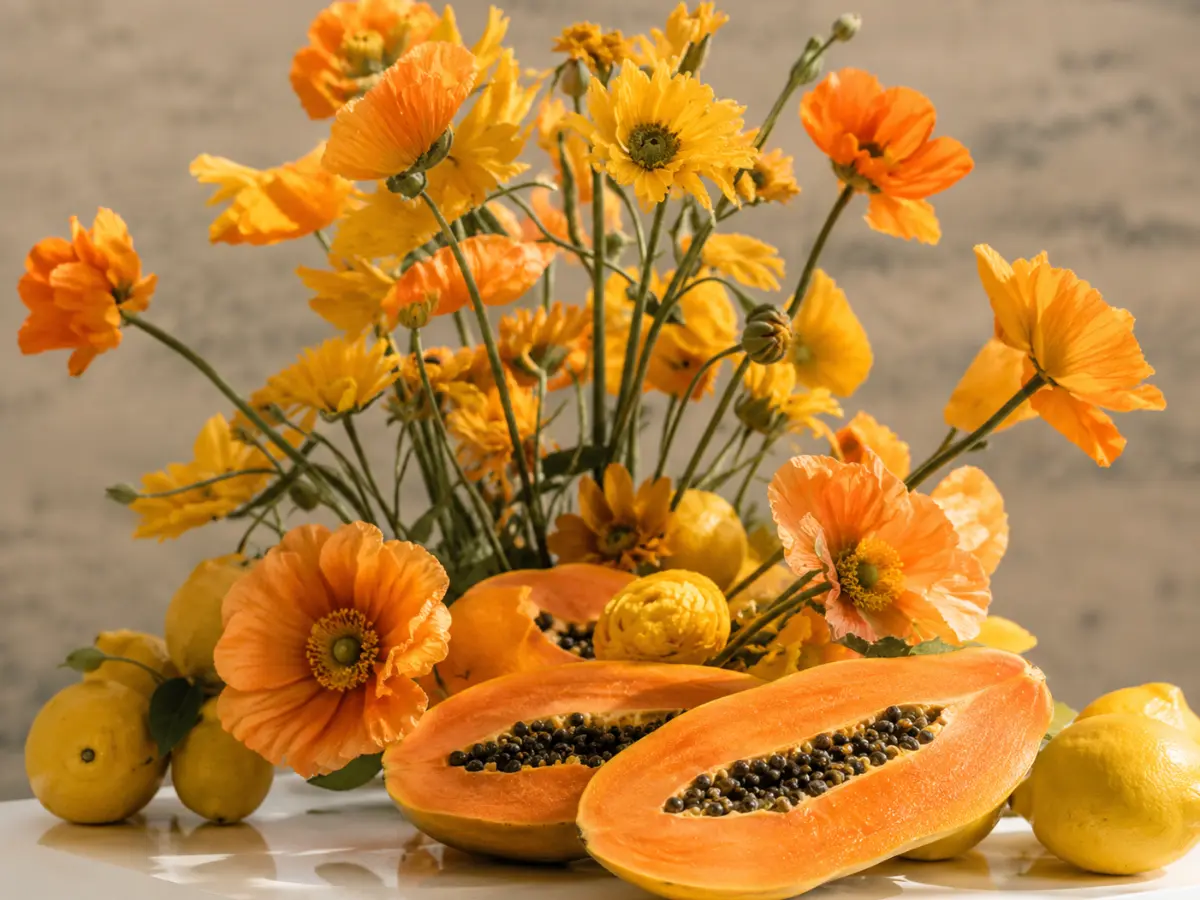
One of the reasons fruit works so well right now is that it quietly ties your florals to the rest of the day. A grazing table or dessert spread styled with the same lemons, figs and grapes that appear in your flowers creates a thread that runs through everything.
It is a small thing, but it is the sort of detail that makes a wedding feel thought through and whole. The flowers, the food and the table all speak the same language, and your guests feel that cohesion even if they never quite name it.
How to style fruit so it feels considered, not kitsch
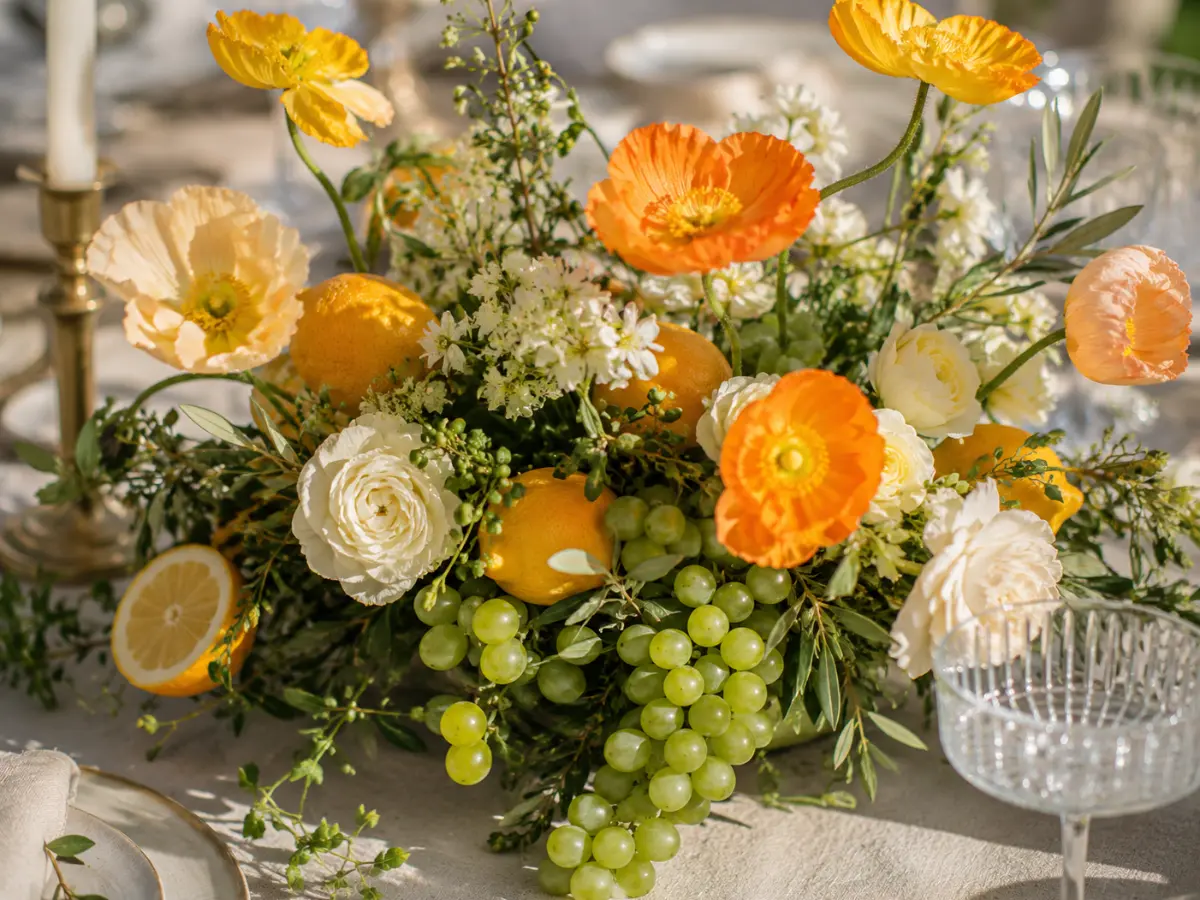
Fruit in florals can tip into novelty if it is not handled with care, so a little restraint goes a long way. A few thoughts from my own work.
Let the season lead. Fruit that is in season looks right, lasts better and costs less, so I always build around what is at its best. Choose a palette and hold to it, so the fruit and flowers feel gathered from one place rather than scattered from many. And keep the Australian summer in mind. In real heat, cut fruit softens and browns, so for a long, warm day I lean on hardier choices like whole citrus and grapes, and I place the more delicate pieces where they will be seen and enjoyed before the afternoon sun finds them.
Done gently, fruit never looks like a gimmick. It looks like a garden, brought to your table with intention.
Your flowers should feel like
part of the celebration
Whether you are imagining fruit-filled table arrangements, garden-inspired wedding flowers or a statement installation, I would love to bring the details together in a way that feels natural, abundant and completely your own.
Dahlia & Thyme Florals proudly provides premium corporate flowers throughout Melbourne's northern suburbs, including Whittlesea and surrounding areas.