
When we lose someone we love, words often fail us. We want to reach out, to say I am thinking of you, to show a grieving family that they are held. Flowers have always done this quietly and beautifully, long before we found the right words. Knowing a little about funeral flower etiquette can take some of the worry out of a tender moment, so your gesture lands exactly the way you mean it to.
If you have ever stood with your phone in your hand, unsure of the next step, please know that is a very normal place to be. At Dahlia and Thyme, a good part of my work is helping people through exactly these moments, so I wanted to gather everything gently in one place.
Funeral flowers and sympathy flowers are not quite the same
It helps to know the difference, because it changes what you send and where it goes.
Funeral flowers are the arrangements created for the service itself. Think of casket sprays, wreaths and standing tributes. These are often chosen by the immediate family, and they take their place at the funeral or memorial.
Sympathy flowers are sent to the people who are grieving, usually to their home. They are a more personal gesture, a way of saying I am here to a friend, a colleague or a relative who has suffered a loss. If you are not part of the immediate family, sympathy flowers sent to the home are almost always the thoughtful choice.
When to send them
For flowers arriving at a funeral, earlier is kinder. Sending them to the funeral home a day or so before the service gives the family and the funeral director time to arrange everything with care.
Sympathy flowers sent to the home can arrive at any time, and there is no window you can miss. In fact, one of the most considered things you can do is to send flowers a week or two after the service. The days immediately after a loss are often a blur, and homes can overflow with blooms all at once. A gentle arrangement arriving later, when the cards have slowed and the house feels quiet again, can mean a great deal.
Choosing the right flowers
Certain blooms have carried meaning around loss for generations, and you may like to choose with that in mind.
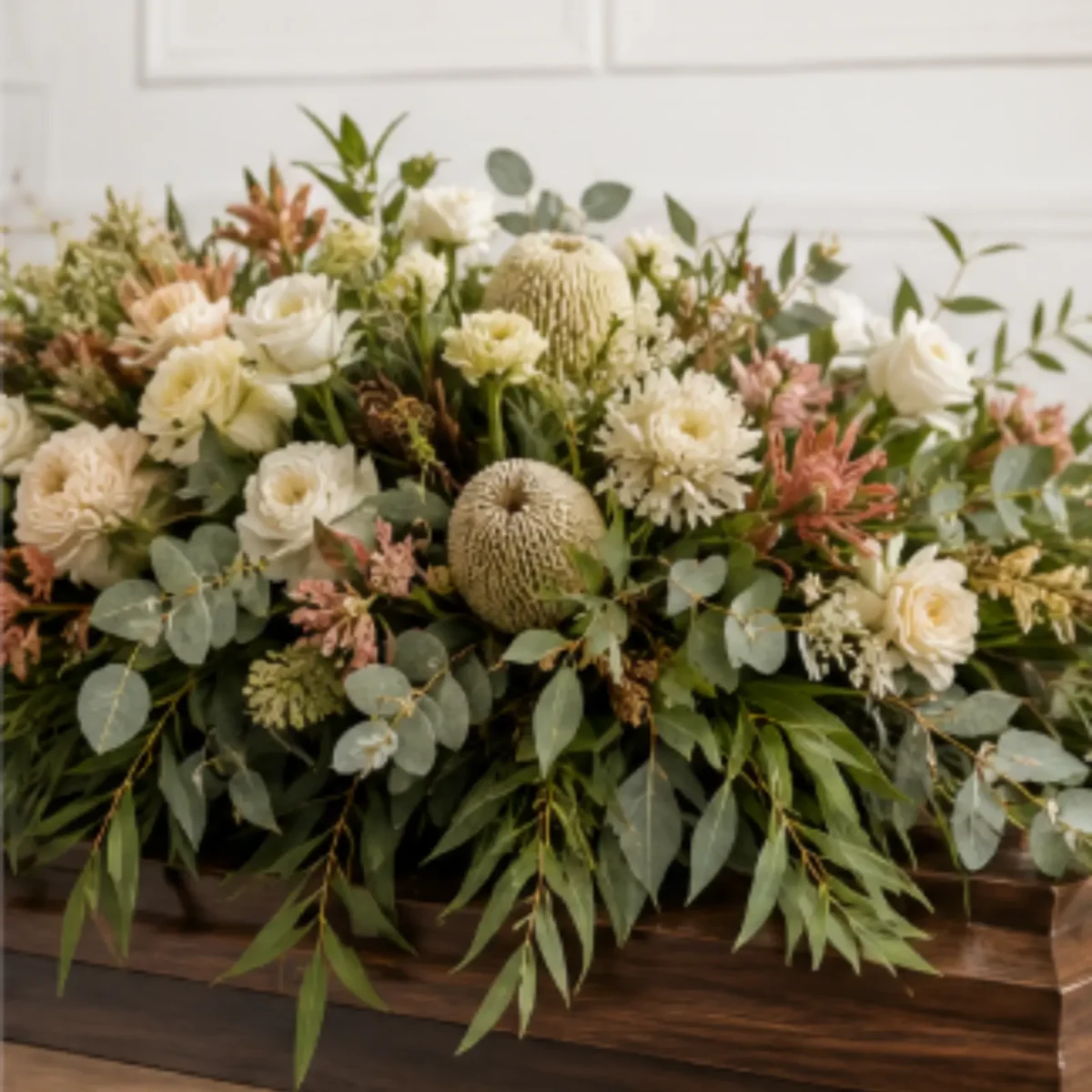
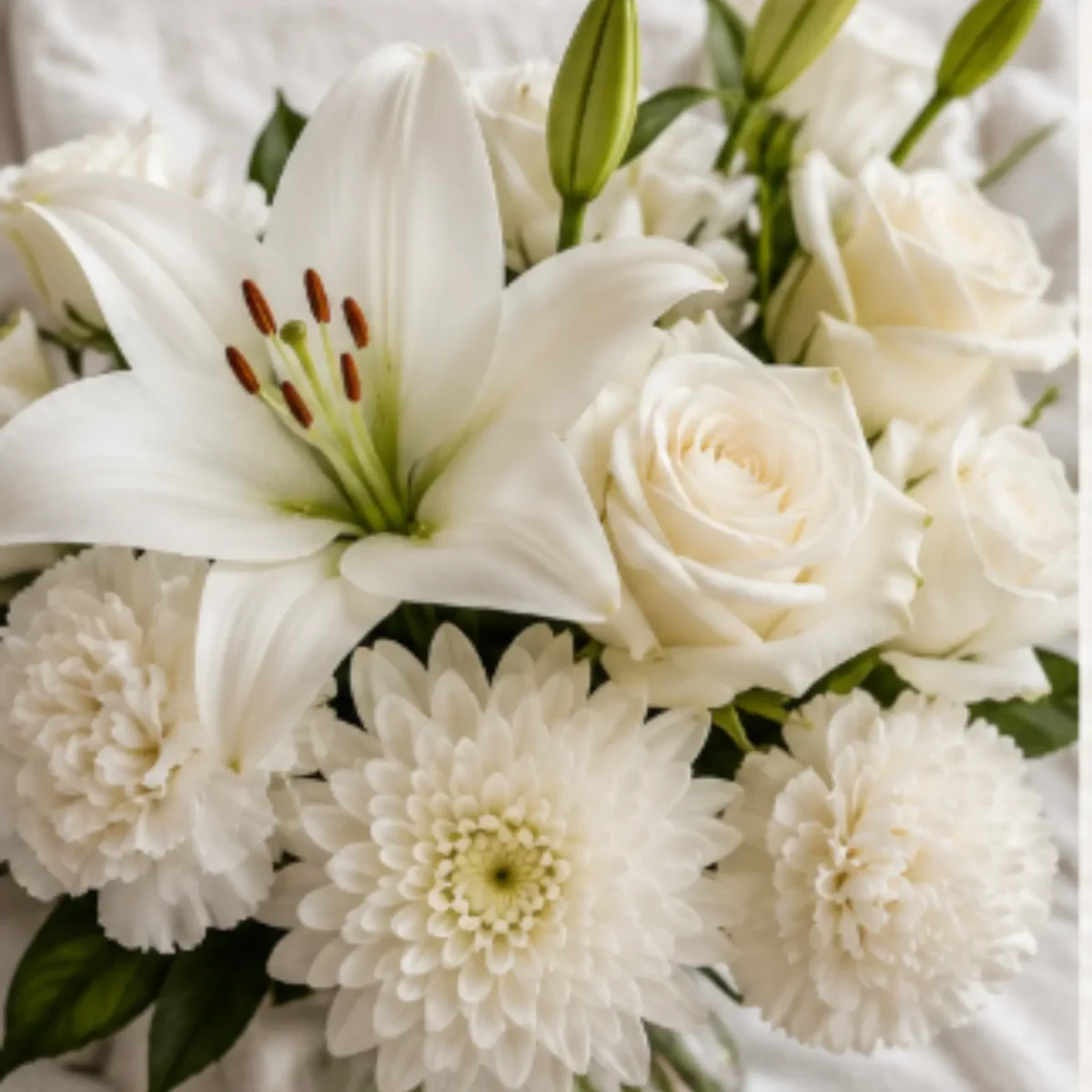
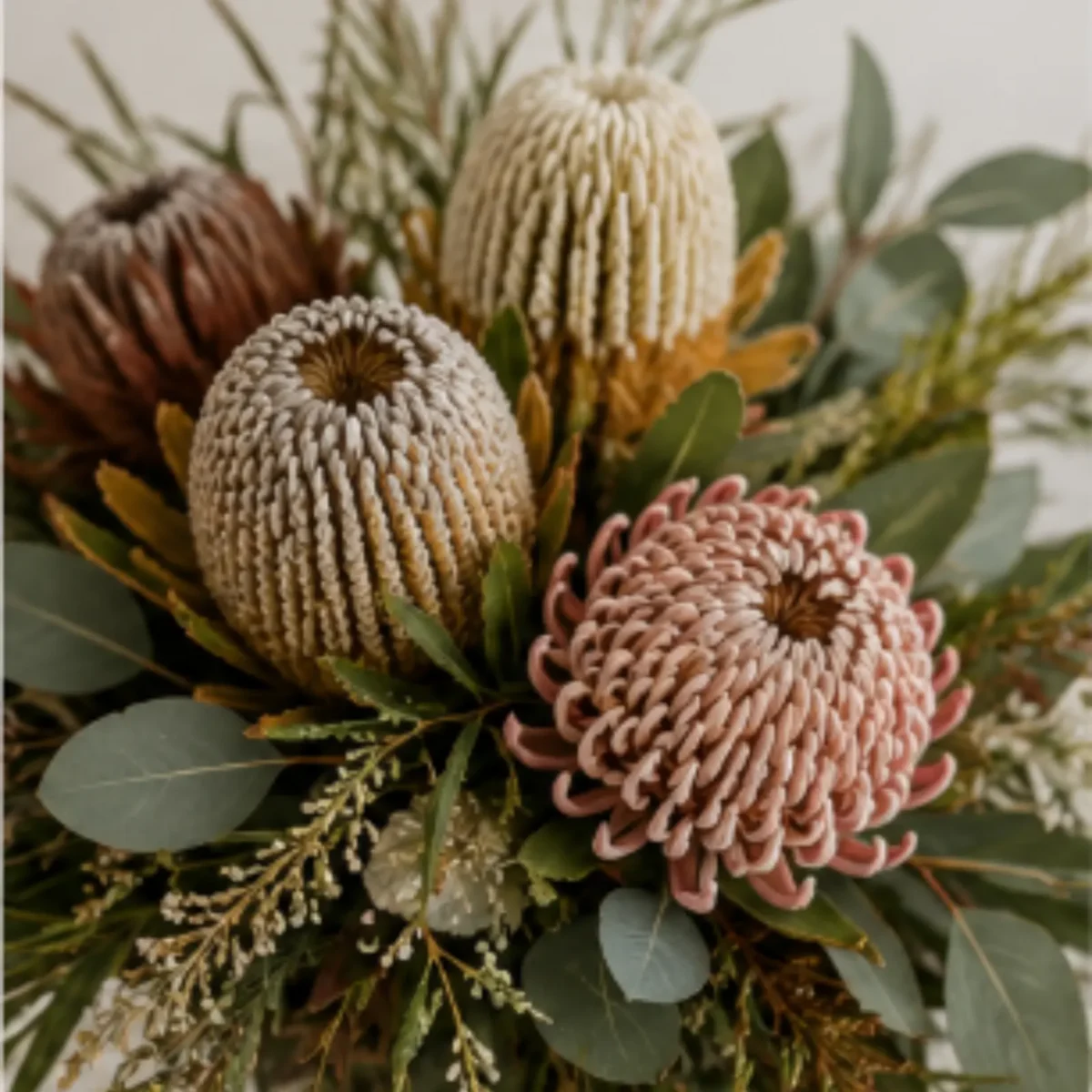
Lilies are perhaps the most traditional, long associated with peace and the restored innocence of the soul. White roses convey love and remembrance, and white carnations symbolise pure love and are a tender, lasting choice. In many cultures chrysanthemums are deeply tied to mourning, which is why you will so often see them in funeral work. Here in Australia, soft natives like banksias and waratahs feel grounded and personal, especially for someone who loved this landscape.
White has always been the classic colour for sympathy and funeral flowers, for the calm it brings. But colour is welcome too. If the person who has passed adored bright dahlias, or always had something cheerful on the kitchen table, an arrangement that reflects who they were can be the most honest tribute of all.
What to write on the card
This is the part people find hardest, and you do not need to write much at all. A few sincere words will always land more gently than a long message you have laboured over. If you are unsure where to begin, something simple and heartfelt is perfect:
- With deepest sympathy.
- Thinking of you and your family during this difficult time.
- Holding you close in our thoughts.
- With love and remembrance.
If you knew the person well, a single small memory can be a gift to the family. A line like I will always remember her laugh, and the way she made everyone feel welcome gives them something to hold. One gentle note on faith: if you know the family follows a particular religion, it is lovely to reflect that in your words. If you are not certain of their beliefs, a warm and neutral message is the kindest choice.
A few small kindnesses to keep in mind
A couple of things are easy to overlook in a tender moment. Be mindful of strong scent for flowers going to a home, as a heavily perfumed arrangement can feel overwhelming in a house where people are already emotionally tired. And please, always read the notice. Some families ask for "no flowers" and invite donations to a charity instead. When that wish is shared, honouring it is its own act of respect. You can still send a card, or make a donation in your loved one's name, so your care is felt all the same.
What funeral flower etiquette really comes down to
For all the small customs, funeral flower etiquette is really about one thing: showing up with care. There is no perfect arrangement and no perfect words, only the quiet message that someone is loved and someone is remembered. If you lead with kindness, you will not get it wrong.
Let me help you find the right words in flowers
If you are facing one of these moments, you do not have to navigate it alone. I create funeral and sympathy flowers here in Whittlesea with a great deal of care, choosing seasonal blooms and gentle colours that feel personal and respectful to the person being remembered.
Whether you need a tribute for a service or a quiet arrangement to send to a grieving friend, I am happy to talk it through with you. You can read more about our funeral and sympathy flowers, or get in touch and we will look after the rest, with the tenderness the moment deserves.